
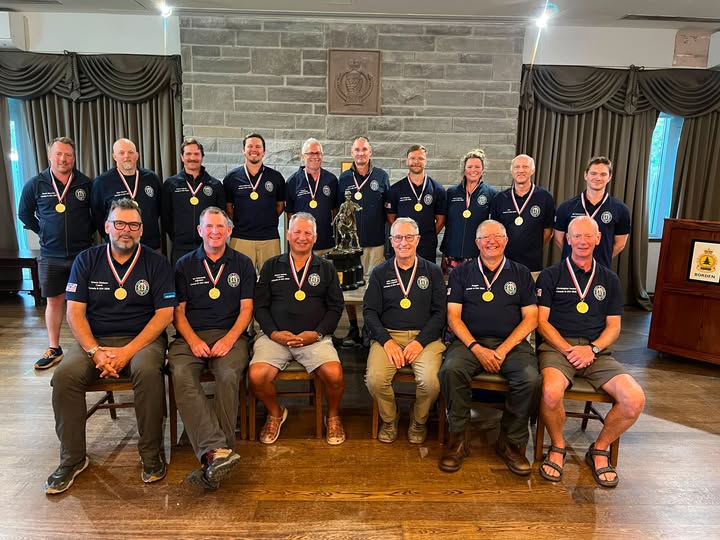
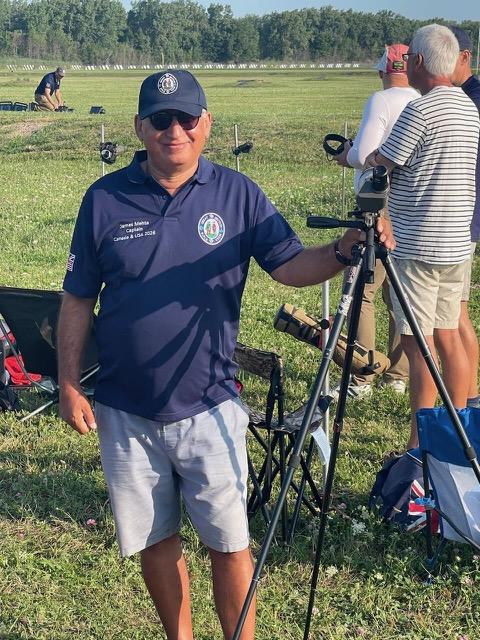
James Mehta (S67-75) has proudly captained the GB Rifle Team to US and Canada this summer. He has written the following exciting update :
In August 2024 I was selected to captain the Great Britain Rifle Team for a tour and series of competitions in Canada in August 2026. This is an almost annual event, traditionally beginning with warm-up matches at a provincial meeting elsewhere in Canada and culminating in the Dominion of Canada Rifle Association Meeting at Camp Borden, Ontario.
In the absence of a suitable provincial meeting in our timeframe, however, we secured an invitation to visit Camp Perry in Ohio, USA, for the Civilian Marksmanship Program National Long Range Matches. This caused considerable excitement: a GB team had not visited Camp Perry for fifteen years.
Many months of planning followed. I selected an experienced senior management team to tackle the considerable administration involved in getting a touring party across the Atlantic, through international borders and home again — a task made rather more complicated when firearms and ammunition are involved.
A team of twenty was selected in 2025, together with a healthy number of reserves. This proved wise, as business and family commitments inevitably forced several of the original twenty to withdraw.
Our sport is entirely amateur, with very little central funding, so team members must make a substantial financial commitment as well as finding sympathetic employers willing to release them for a three-and-a-half-week tour. Fundraising is therefore important, and we were extremely grateful to our sponsors and contributors, including the Society of Old Framlinghamians.
Training weekends began in autumn 2025 and continued through 2026. We departed only a few days after the Imperial Meeting at Bisley in July — just enough time to do the laundry, carry out any rifle maintenance and repack the bags.
We flew into Toronto, collected hire cars and drove to Woodstock for our first night. No, sadly not the Woodstock you may remember! The following day we crossed the border near Detroit and continued to Camp Perry, a National Guard base near the sleepy town of Port Clinton on the shores of Lake Erie and the traditional home of the US CMP.
After reassembling the rifles following their long journey, we had a shake-down shoot at 600 yards before starting in earnest the next day.
Shooting procedures in the USA differ considerably from those we are used to in the UK. The Americans fire “strings” of sighters and twenty scoring shots within a time limit, whereas we normally fire in turn, with two or three shooters sharing the firing point. It took a little adjustment, but the GB shooters are an adaptable crew and soon settled in, producing some magnificent scores.
The targetry at Camp Perry also took some getting used to. The electronically marked targets are very close together, with small number boards that become particularly difficult to read through the heat haze. There is no traditional sand-stop butt; the bullets simply continue out over the lake behind (beware errant jet-skiers!). Cross-shooting — which counts as a miss and costs ten points — is therefore surprisingly easy. I think we all managed it at least once.
After a day at 600 yards we moved into a concentrated series of competitions at 1000 yards, where visibility became still more difficult. Early mornings were pleasant, but the sun soon brought rising temperatures and humidity, while the wind became increasingly troublesome.
Our week at Camp Perry culminated in an unofficial match against the USA over a “Palma” course of fire: twelve firers, with two sighters and fifteen scoring shots at each of 800, 900 and 1000 yards. We began superbly, going “clean” — without dropping a point — at 800 yards. At the longer distances, however, the match confirmed our suspicions about the ammunition supplied by the US manufacturer Berger. Although excellent at shorter ranges, it appeared less consistent at long range, particularly at 1000 yards and in some rifles more than others; mysteriously, one of our team nevertheless went clean for the entire match. We eventually lost to the USA by just 16 points out of a possible 5,400.
Leaving Camp Perry, we headed back into Canada, most vehicles taking the opportunity to stop at Niagara Falls. We then reached Barrie, Ontario, for a much-needed few days’ break. The team enjoyed sightseeing in Toronto, the first team dinner of the tour, and a visit to Rogers Stadium to watch the Toronto Blue Jays beat the Boston Red Sox. It’s a bit like rounders, but with more razzamatazz, hot dogs and beer.
We also conducted a thorough post-mortem on our equipment, although it failed to explain the long-range ammunition problem. Laboriously weighing every round and batching them into similar weights removed some of the more obvious flyers, but it remained a worrying weakness. Fortunately, retired US Colonel Emil Praslik, now with Berger and a longstanding friend of British shooting, came to our rescue. Emil arranged enough components for us to manufacture 2,000 rounds of bespoke ammunition, sufficient for the Canadian team matches and a limited number of individual events. Producing it in our hotel rooms kept the team out of mischief for several evenings.
Shooting at Canada’s vast Camp Borden brought different challenges, not least clouds of crickets stirred up by walking across the range. The little blighters bite too, so insect repellent was soon much in demand. Canadian military operational requirements restricted our first two days to the shorter Vimy range, with a maximum distance of 500 yards. After the rigours of Camp Perry this was no bad thing, and it also gave us time to prepare ammunition for the longer matches.
On moving to the longer Mons range, the team began to perform admirably in the individual events, with numerous top-ten placings by British firers. The ranges are buried in the Ontario forests, creating complicated wind conditions: turbulent in the lee, stronger through the middle and then deflected again by the downwind trees, producing very localised shifts. The weather remained warm and sunny, but was refreshingly cooler than Ohio.
The team matches occupied the final three days of the tour. These were what we had come to win; individual success was gratifying, but it was not the purpose of the tour.
First came the Canada Match, a short-range contest at 300, 500 and 600 yards, with eight firers shooting two sighters and ten scoring shots at each distance. A tremendous performance by the GB firers and wind coaches saw us drop only 16 points from a possible 1,200; four of our firers dropped just one point between them. It gave us a comfortable victory over a strong USA team and the host Canadians.
The following day brought the Commonwealth Match, normally a long-range competition at 900 and 1000 yards but on this occasion curtailed to two sighters and fifteen scoring shots at 1000 yards for twelve firers. GB dropped just 17 points from a maximum 900, securing a narrow two-point victory over the USA, with Canada a further ten points behind.
With two matches won, we entered the final day hoping to complete a rare treble in the America Match. It is an unusual contest, fired only when the USA is present, and many shooters can go through an entire career without competing in one. I must be something of a rarity in having shot three! The previous America Match had been held at Raton, New Mexico, in 2024.
The course of fire is a marathon rather than a sprint: eight firers, with two sighters and fifteen scoring shots at 300, 600, 900 and 1000 yards, for a maximum score of 2,400. Team selection was critical. I needed shooters who could do everything, rather than short- or long-range specialists — and yes, there are such creatures.
By then the weather had changed and heavy rain was forecast. The team captains and range staff agreed on an early 08:30 start and lunch on the run, hoping to finish before conditions became really “gnarly”, in the words of one of our hosts, by mid-afternoon.
The match was a nail-biter, nip and tuck throughout the day. Canada overturned a small GB advantage before the USA came back strongly. Heavy rain twice obscured the targets and stopped shooting, although being British we perhaps felt rather more at home in it. By the time we reached 1000 yards any of the three teams could still win. The weather was grim, the wind at times almost unreadable, and handfuls of points could disappear very quickly.
By studying the weather radar, GB managed both the conditions and the clock better than our opponents. The USA delayed too long and eventually had to shoot in wind in which we had chosen to hold back. Our final firer, reputed to have antifreeze in his veins, calmly slotted his last five shots into the bull while the Americans were forced into a hurried finish. GB had done it: we dropped 52 points, compared with Canada’s 59 and the USA’s 68.
Huge celebrations followed, with handshakes, hugs and generous congratulations from our opponents. Winning two matches is unusual enough for GB; winning all three had last been achieved 25 years earlier. It was a genuine team effort. Firers, coaches, scorers, ammunition loaders and kit carriers all played their part.
The tour ended with our final team dinner, at which some celebratory drinks may have been consumed, helped by a generous gift from the OF Rifle Club. Packing for the flight home the following day was, understandably, a rather muted affair.
And so concluded what was possibly the highlight of my shooting career, which began at Fram as a teenager under the guidance of dedicated shooting staff who taught me the basics properly. Those people are no longer with us, but I hope they might look down with some satisfaction on the callow youth sneaking off for crafty smokes at Bromeswell range who eventually became captain of his country and led a team to a notable victory. I remain enormously grateful to them for giving me a sport that has lasted more than fifty years.
For further details, and to see an impressive tour brochure — complete with a large advert for Fram — please visit the GB Rifle Team 2026 website at:
https://gbrt.org.uk/tours/usa-canada/2026/information
James is pictured 3rd from left in group photo above.
One honour extended to him by the Americans was to fire the cannon in the morning, at which point they played the anthem and raised the colours. He’d only been in the country for three days and they let him lose with artillery!
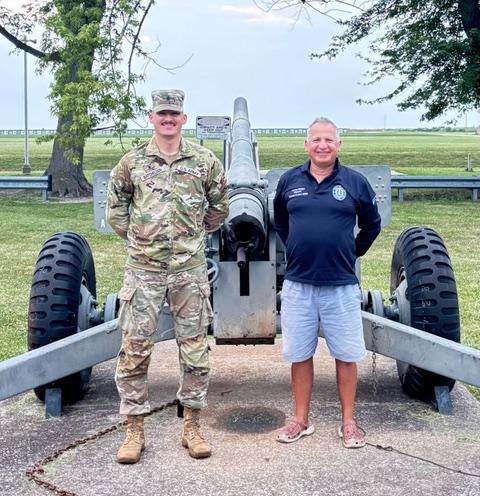
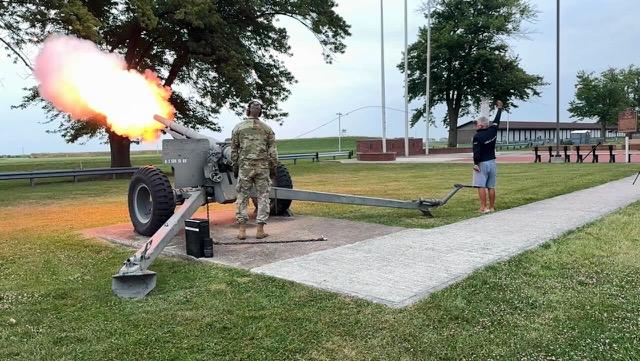
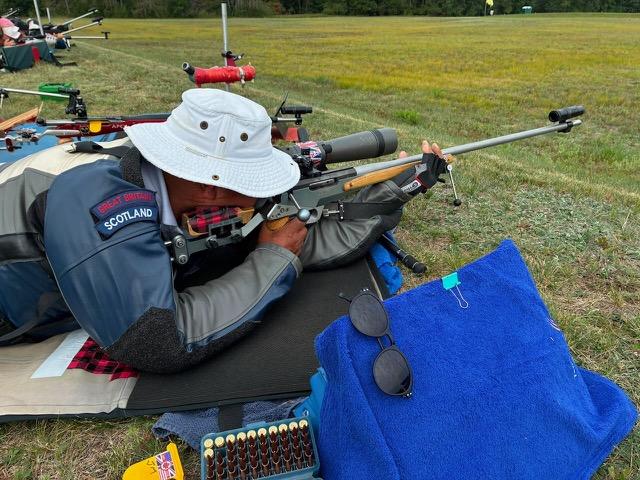
Other photos of James shooting and standing.
Comments
Join the conversation
Log in to add your comment
1 comments
Sort by
Howard Thistlewood
Tuesday 01 September 2026