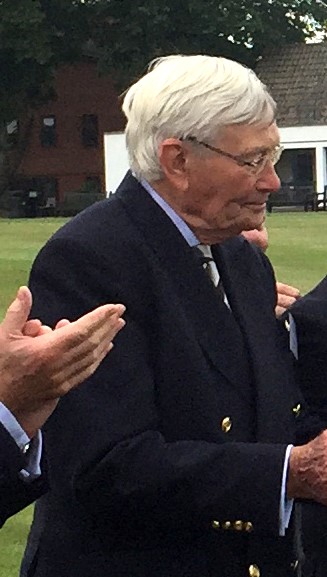
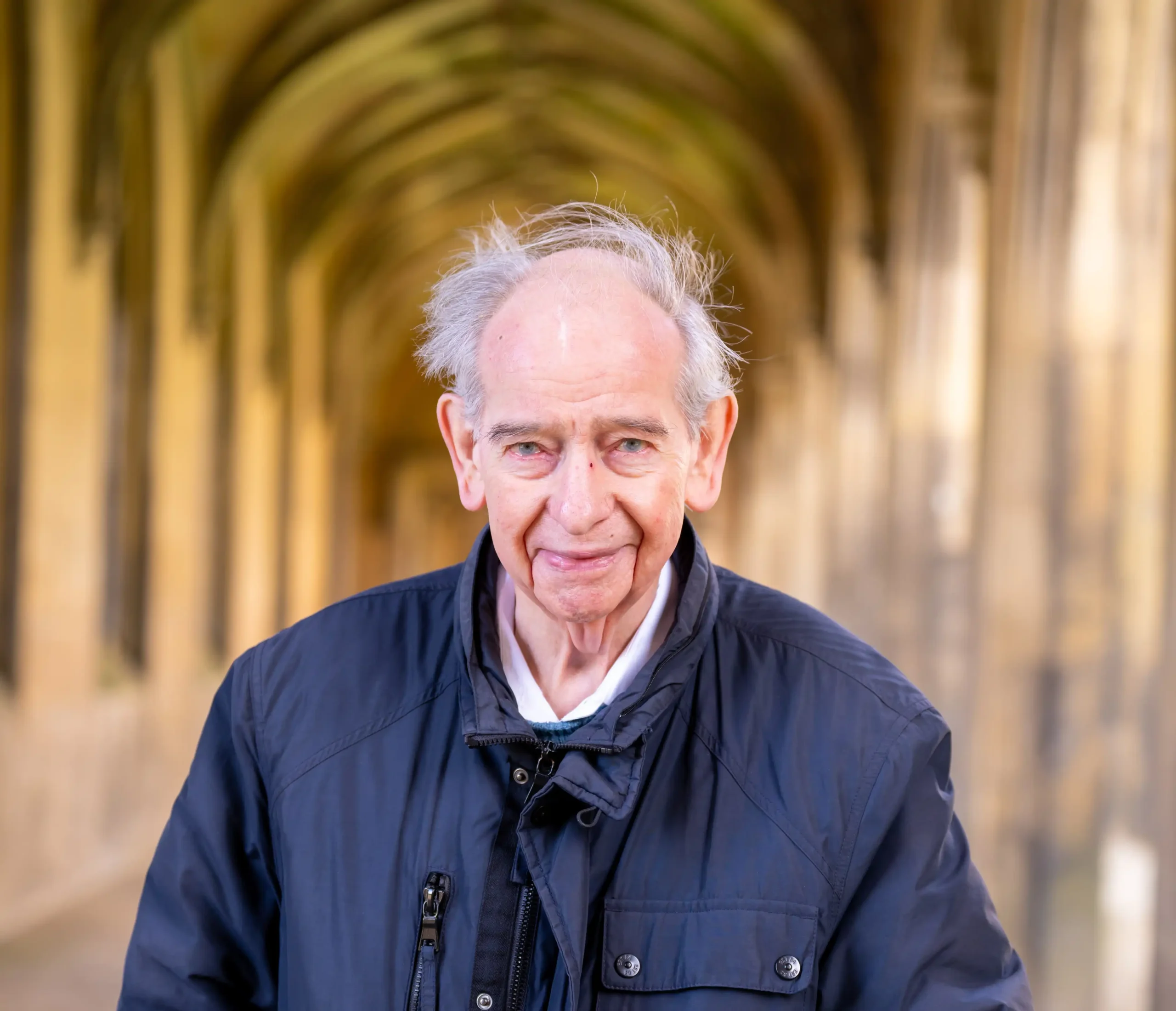
Professor John Iliffe (G52-57) died on 20 August 2026 at the age of 87. His late brother Charles (G48-53), his nephews Mark Iliffe (G80-88) and Simon (G82-90) all attended the College. John is a Distinguished OF – click here for his entry.
His funeral will be at 11:00am on Monday 28th September St John’s College Chapel Cambridge.
Tributes have been paid to a distinguished St John’s College Cambridge University researcher renowned for his life’s work in African history and the following has been sent in by the family.
John Iliffe MA PhD LittD, Emeritus Professor of African History, wrote many notable books on Africa and specialised in Tanzania, where he taught at the University of Dar es Salaam for several years.
Professor Iliffe was educated at Framlingham College, Suffolk, and Peterhouse, Cambridge. After completing his PhD, he taught at the University of Dar es Salaam from 1965-1971
He became a Fellow of St John’s College, Cambridge, in 1971, when he was appointed University Assistant Director of Research in History. From 1980-90 he was Reader in African History and was Professor of African History from 1990 until his retirement in 2006. He was working on his latest research until recently and died on Thursday 20 August 2026.
“African history owes John a staggering debt in his sheer curiosity, his extraordinary appetite for gruelling hard work, his courage in publishing in so many areas of others’ expertise, perhaps above all his intellectual capacity to lodge intimate human anxieties, hopes, obligations, determination and expectation in long spans of continental-wide change and continuity, said Professor John Lonsdale, Emeritus Professor of Modern African History and Fellow of Trinity College, Cambridge.
“To those who had the good fortune to know him he will be sorely missed. And future scholarly generations who will never know him personally, will, so long as reading continues, benefit from engaging with his thoughts, always expressed in such clear and uncomplicated prose. His combination of query and encouragement was always so positive.”
Arriving soon after the unification of Zanzibar and Tanganyika as the independent republic of Tanzania, Professor Iliffe was a central figure of Dar es Salaam’s ‘School of African history’, which focused on African agency.
“African history owes John a staggering debt in his sheer curiosity”
A Fellow of the British Academy from 1989 to 2006, his seminal books include A Modern History of Tanganyika(1979), which he researched while teaching in the East African country, the comprehensive Africans: The History of a Continent (first ed 1995), and Honour in African History (2005).
In 1988 the African Studies Association awarded Professor Iliffe the Herskovits Prize – now known as the ASA Book Prize – for The African Poor: A History (1987), which gained him recognition in US academia.
Professor Iliffe taught generations of St John’s students as a Lecturer and Supervisor in History until 2015. Professor Simon Szreter, Professor of History and Public Policy and a Fellow of St John’s College, learned under him as an undergraduate.
“John’s wonderfully thorough and eye-opening lectures and classes enabled a complete novice in African history to grapple enjoyably with the primary sources of French and English missionaries, colonial authorities and translated Baganda memoirs,” said Professor Szreter.
Professor Lonsdale said Professor Iliffe’s Modern History of Tanganyika ‘is still the best national history of any new African state’.
“Nobody else has tackled such a humane variety of historical topics: African famine, African capitalism, the many different senses of African honour, political biography, the birth of the East African medical profession, the suffering and endurance of the African poor over the centuries, the AIDS epidemic, culminating in his absolutely essential Africans, The History of a Continent – from the origins of humankind to the present day – and of which the third edition appeared from the Cambridge University Press in 2017