
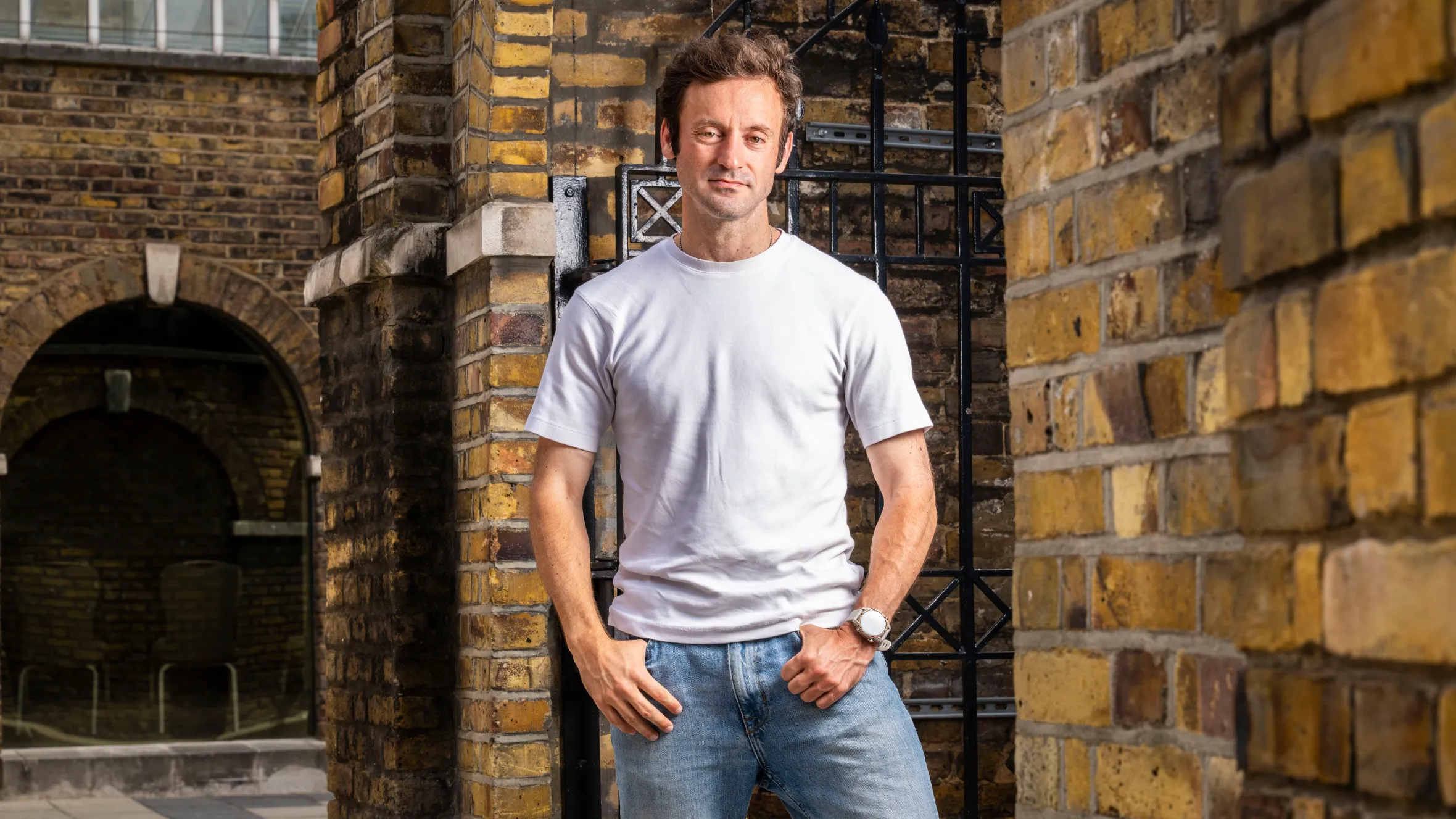
Gui Wainwright (G01-04) is the chief executive of Occam, a London-based tech firm which has developed software that allows AI-powered craft to autonomously identify and strike targets in Russia. According to an excellent article in The Times this is creating a new type of war. He co-founded the start up company last year.
According to the article it all started as a paternity leave project in his garden shed when he wondered if his coding skills could do something to help Ukraine. Six weeks later, he began testing his prototype software in suburban west London’s Gunnersbury Park — his baby daughter in a papoose, his dog beside him and his drone on a leash.
He says “It was on a leash in case it saw humans, because it didn’t have a kill switch at that point,” he said. “People were like, ‘Why’s your drone on a leash?’ That was usually my cue to move on.”
Eighteen months later, he is at the vanguard of a change in warfare that is as revolutionary as it is daunting. He is introducing the world’s first known network of fully autonomous drones onto a real battlefield: Terminator-style, kamikaze drones enabled with AI to find and kill targets independently without any human interaction.
He also realised that Ukraine didn’t need a brand new autonomous drone “built by someone in western Europe who’d charge them ten grand each and try and sell them a million”. Instead, he thought, “they needed the drones they already have to be made autonomous, because they already have a f***ing phenomenal supply system”. Ukraine’s drone fleets already had cameras, sensors and chip boards. What they were lacking was the software he has now built to program them to operate autonomously. His “hardware agnostic” solution means it is very easy to rapidly scale, as well as cheap.
Investors are also very interested with multiple civilian applications also feasible with its groundbreaking software and Occam has raised millions in seed funding so far. It is why he thinks the company could reach a valuation of $1 billion next year, making it a rare British unicorn. The Ukrainian government will not be contributing to that though. He has said that the prospect of making money from its fight for survival “horrifies me” so he is giving Occam’s software and services to Ukraine without profit.
He initially wanted to be a war correspondent and after leaving the College studied history at Queen Mary University of London. He taught himself to code in his early twenties and joined a hacking community, “which taught me to think about code differently because you’re looking for gaps to exploit”. He started his career in tech with Cambridge Analytica, the controversial former data analysis firm, and had moved to Moody’s, the financial services company, when his first child was born in February last year.
Read the full Times article by clicking here.
Comments
Join the conversation
Log in to add your comment
0 comments